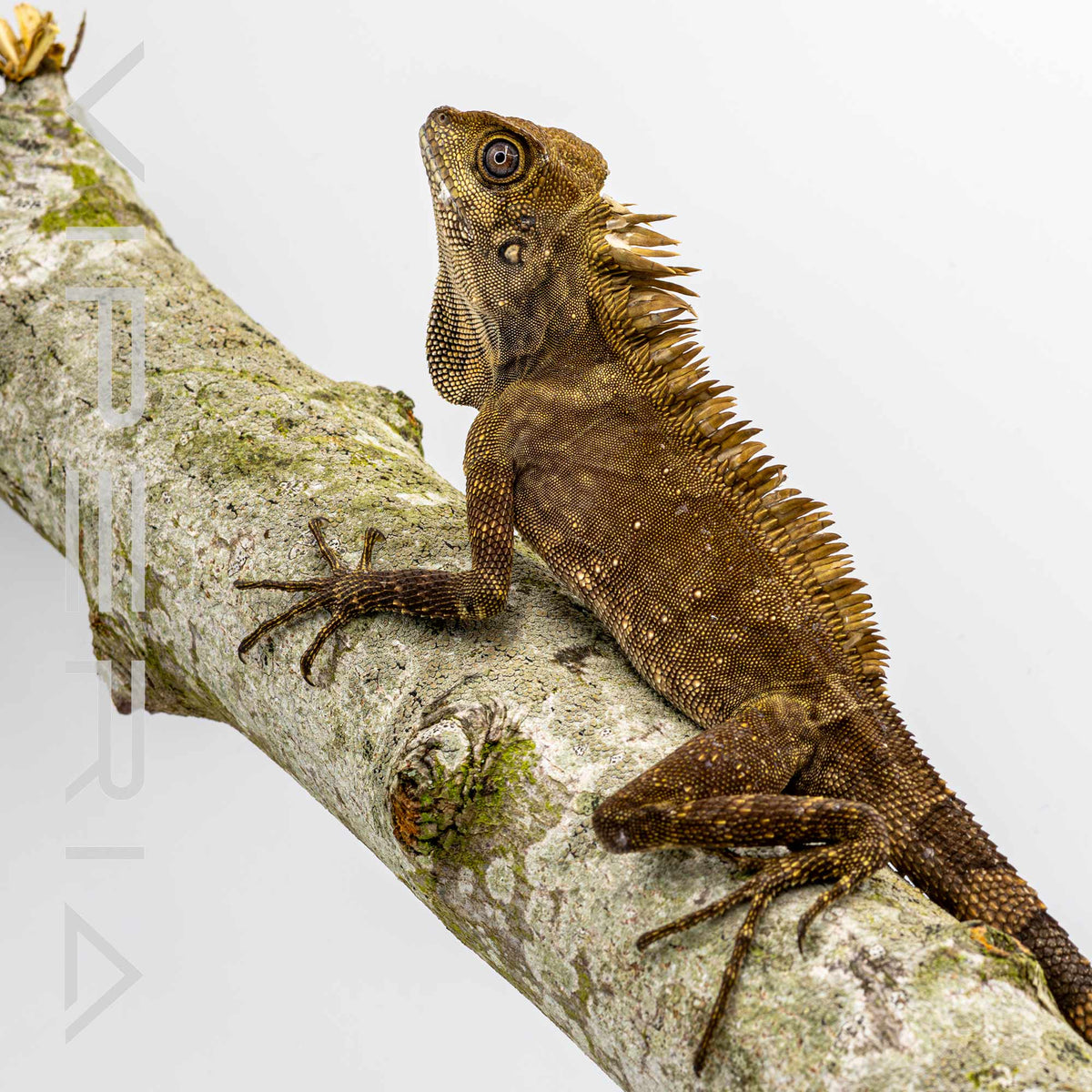
Borneo Angle-headed Lizard (Gonocephalus borneensis)
Borneo Angle-headed Lizard (Gonocephalus borneensis)
Or spread the cost with Klarna at checkout.
Couldn't load pickup availability
- Scientific name
- Gonocephalus borneensis
- Source
- WC (Wild caught)
Scientific Name: Gonocephalus borneensis
Source: WC
Adult Size: Approximately 25–35cm total length
Native Range: Borneo (Malaysia, Indonesia, Brunei); found in primary and secondary tropical rainforest
Enclosure: A minimum 60×60×90cm Viperia PVC vivarium, furnished with sturdy diagonal and horizontal branches for climbing, dense live or artificial foliage for cover, a moisture-retaining substrate such as coco fibre or organic topsoil, and a shallow leaf-litter layer to encourage natural behaviour
Heating: Basking spot of 30°C; ambient temperature of 24–28°C throughout; a gentle night-time drop to 20–22°C is acceptable and reflects natural conditions
Humidity: 75–90%; achieved by misting the enclosure once or twice daily, using a moisture-retaining substrate, and ensuring good but gentle ventilation to prevent stagnant air
UVB: A 6% UVB tube run along most of the vivarium's width, positioned so the animal can bask at a distance of around 20–30cm from the lamp; as a forest-dwelling species it receives dappled, filtered light in the wild rather than direct intense sun, making a 6% output the appropriate choice
Diet: Live invertebrates form the bulk of the diet — offer appropriately sized crickets, dubia roaches, locusts, and the occasional waxworm or mealworm as a treat. Feed juveniles daily and adults every two to three days, dusting prey with a calcium supplement at most feeds and a combined vitamin/mineral supplement once a week
ABOUT THIS SPECIES
The Borneo Angle-headed Lizard is a striking arboreal (tree-dwelling) species from the dense rainforests of Borneo, instantly recognisable by its laterally compressed body, vivid green colouration, and the angular, helmet-like crest on its head that gives the group their evocative common name. Males in particular develop impressive head ornamentation and can display rich turquoise and emerald tones, making them one of the more visually spectacular forest lizards available in the hobby.
These lizards are best suited to an experienced keeper who can maintain the consistently high humidity and warm, stable temperatures that their tropical origins demand — they are sensitive to environmental fluctuations and do not typically enjoy frequent handling, thriving instead as a display animal in a beautifully planted vivarium setup. For the keeper willing to invest in getting conditions just right, they are deeply rewarding and relatively long-lived lizards that rarely fail to impress.
Delivery Information
Delivery Information
Livestock is delivered either on our own van or by a specialist livestock courier. Delivery options and prices for your order are shown at checkout.
Share