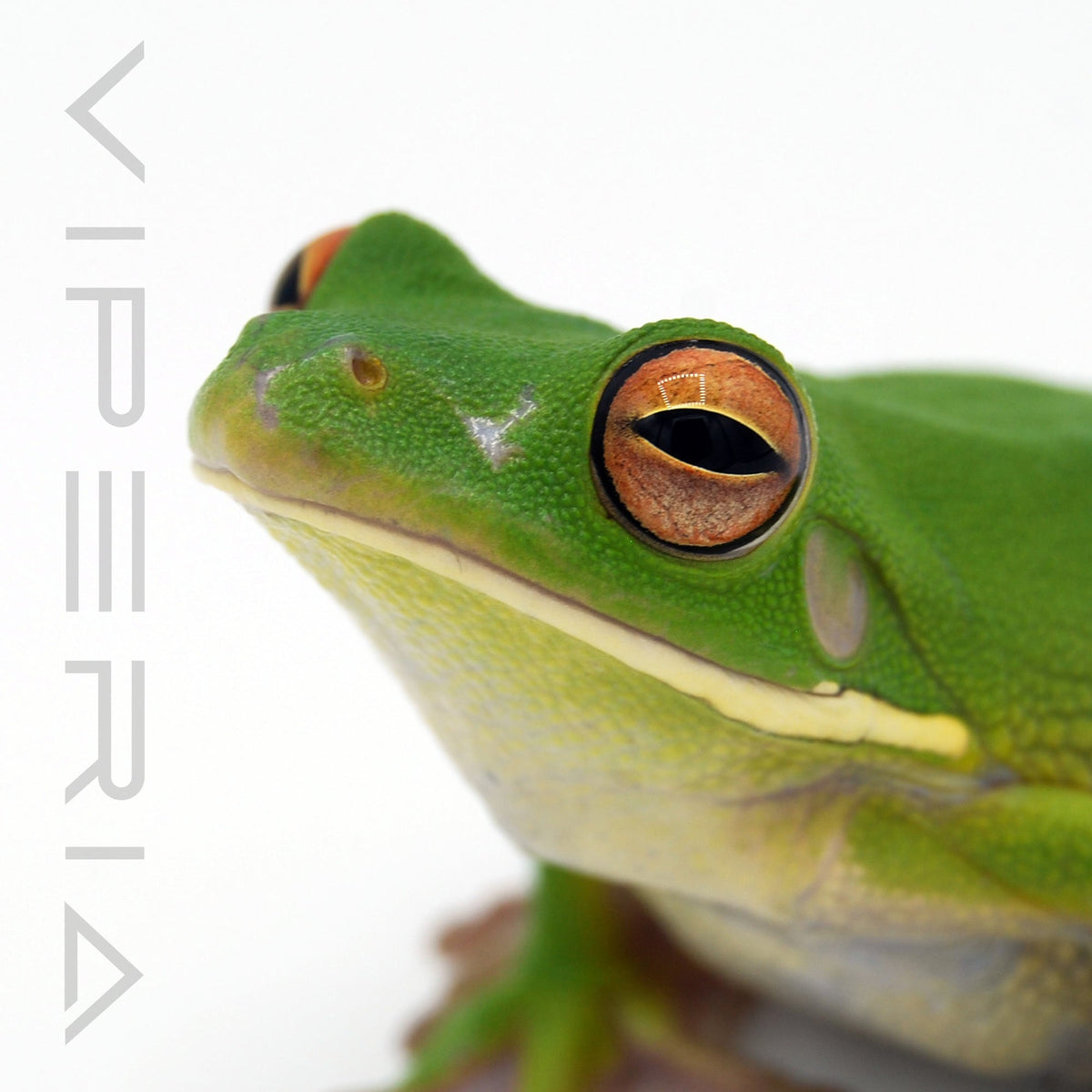
White-Lipped Tree Frog (Litoria infrafernata)
White-Lipped Tree Frog (Litoria infrafernata)
Or spread the cost with Klarna at checkout.
Couldn't load pickup availability
- Scientific name
- Litoria infrafernata
- Source
- WC (Wild caught)
Scientific Name: Litoria infrafrenata
Source: WC
Adult Size: 10–14cm (females typically larger than males)
Native Range: Northern Queensland (Australia), New Guinea, and surrounding Pacific islands
Enclosure: A minimum 60×60×90cm Viperia PVC vivarium for a single adult or pair — this is an arboreal (tree-dwelling) species that makes full use of vertical space, so height is essential. Furnish with sturdy branches and cork bark for climbing and resting, a thick layer of moisture-retaining substrate such as coco coir at the base, and plenty of broad-leaved artificial or live plants to provide cover and resting spots at height. Ensure the enclosure has excellent ventilation to prevent stagnant air whilst maintaining humidity.
Heating: Aim for a daytime ambient temperature of 24–28°C with a warm basking area reaching around 30°C. A gentle night-time drop to 20–22°C is perfectly acceptable and mirrors natural conditions.
Humidity: Maintain humidity between 60–80%, rising to around 80–90% at night. Regular misting of the enclosure walls and plants once or twice daily is the most effective method; a reptile fogger used on a timer can supplement this, particularly overnight.
UVB: A 6% UVB tube run along most of the vivarium's width, positioned so the animal can bask or rest 20–30cm below it. Although white-lipped tree frogs are largely crepuscular to nocturnal, low-level UVB exposure supports calcium metabolism and overall health in captivity.
Diet: Insects form the core of their diet — offer appropriately sized crickets, locusts, cockroaches, and occasional waxworms or mealworms as a treat. Adults can take larger prey items and may accept the occasional pinky mouse, though invertebrates should remain the staple. Feed juveniles daily and adults every two to three days, dusting all prey with a quality calcium and vitamin D3 supplement at most feedings.
ABOUT THIS SPECIES
The white-lipped tree frog is the largest tree frog species in the world, native to the tropical rainforests and forest edges of northern Australia and New Guinea. They are instantly recognisable thanks to the bright white stripe running along their lower jaw — a clean, contrasting feature against their vivid green colouration — and their impressively large, sticky toe pads that allow them to cling confidently to almost any surface.
These are bold, characterful frogs that tend to be far more outgoing than many other amphibian species, making them genuinely engaging to observe as they become active towards dusk. They are best appreciated as a display animal rather than one handled frequently, and suit a keeper who has some prior experience with tropical amphibian husbandry and is confident maintaining consistent humidity and temperature gradients.
Delivery Information
Delivery Information
Livestock is delivered either on our own van or by a specialist livestock courier. Delivery options and prices for your order are shown at checkout.
Share