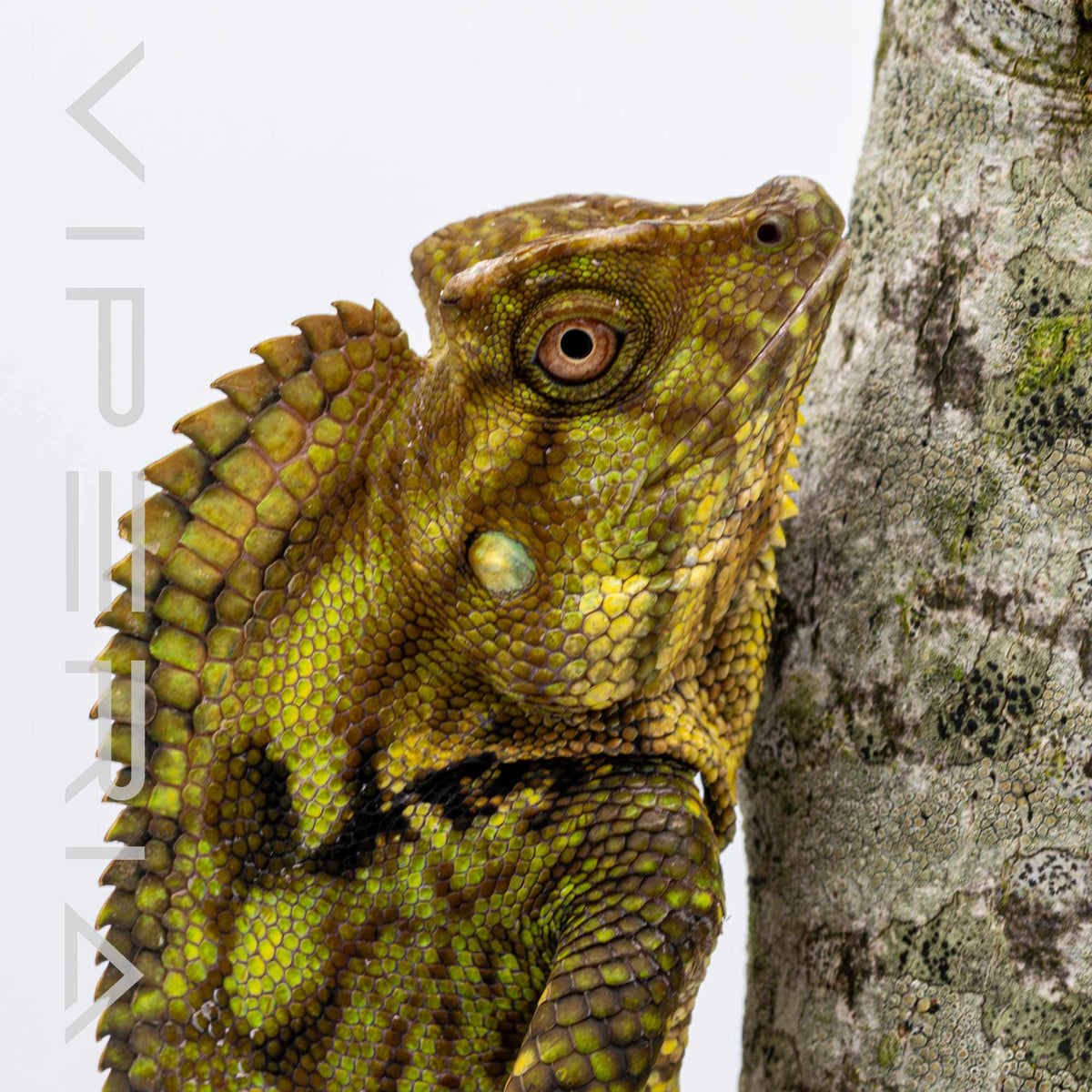
Doria's Angle-headed Lizard (Gonocephalus doriae)
Doria's Angle-headed Lizard (Gonocephalus doriae)
Livestock image disclaimer
Images shown are representative examples only. The animal you receive may vary in appearance from the image shown.
Couldn't load pickup availability
Scientific Name: Gonocephalus doriae
Source: WC
Adult Size: Approximately 25–35cm total length
Native Range: Borneo (Malaysia, Indonesia, Brunei) — lowland and montane rainforest
Enclosure: A minimum 90×60×90cm Viperia PVC vivarium — arboreal setup with plenty of vertical space, thick diagonal and horizontal branches for perching, dense tropical planting or artificial foliage for cover, and a deep moisture-retaining substrate such as coco coir or topsoil blend to support humidity
Heating: Basking spot of around 30°C, ambient temperature of 24–28°C, with a natural night drop to 20–22°C
Humidity: 75–90%; achieved through daily misting, a moisture-retaining substrate, and live or artificial plants — good ventilation is essential to prevent stagnant, stale air while maintaining the required humidity
UVB: A 6% UVB tube run along most of the vivarium's width, positioned so the animal can bask approximately 20–30cm from the lamp — this reflects the dappled, filtered forest light of their natural rainforest canopy habitat
Diet: Primarily insectivorous (insect-eating) — offer a varied diet of appropriately sized crickets, dubia roaches, locusts, and occasional waxworms or calci-worms. Feed adults every 2–3 days and juveniles daily. Dust prey with a calcium supplement at most feeds and a multivitamin supplement once or twice weekly.
ABOUT THIS SPECIES
Doria's Angle-headed Lizard is a stunning arboreal (tree-dwelling) species from the rainforests of Borneo, where it inhabits humid lowland and montane forest edges, clinging to branches and trunks with remarkable stillness. Males are especially striking, displaying vivid green and turquoise tones with angular head crests that give the genus its name — making them one of the more visually impressive lizards available in the hobby.
These lizards are best appreciated as a display species rather than a hands-on pet; they are shy by nature and do best in a beautifully planted vivarium where they can be observed rather than frequently handled. They suit a keeper who has some experience with tropical species and enjoys the challenge of replicating a humid, bioactive rainforest environment — the reward is watching a truly spectacular lizard thrive in a setup that doubles as a living display.
Delivery Information
Delivery Information
Livestock is delivered by our own driver, never couriered. Vivariums ship on a tracked pallet service. Full delivery details at checkout.
Share