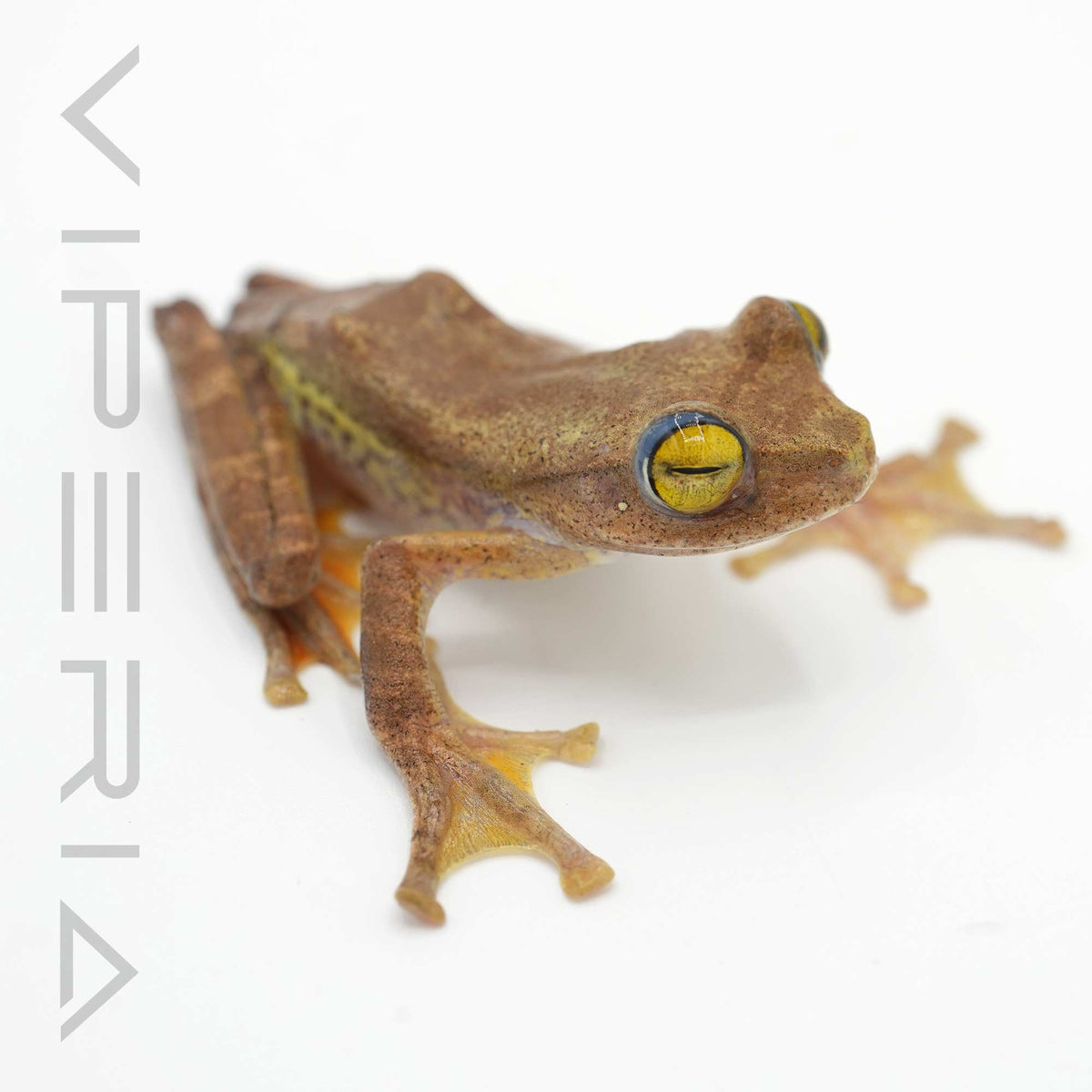
Harlequin Tree Frog (Rhacophorus javanus)
Harlequin Tree Frog (Rhacophorus javanus)
Or spread the cost with Klarna at checkout.
Couldn't load pickup availability
- Scientific name
- Rhacophorus javanus
- Source
- WC (Wild caught)
Common Name: Harlequin Tree Frog (Java Flying Frog)
Scientific Name: Rhacophorus javanus
Source: WC
Adult Size: 4–6.5 cm SVL
Native Range: Java, Indonesia; recorded in forested areas including higher-elevation sites
Enclosure: Tall, planted arboreal vivarium with plenty of broad leaves and vertical perches; from 45 × 45 × 60 cm for one adult (larger preferred)
Heating: This is a cooler-leaning Rhacophorus - aim for moderate daytime temps with a noticeable night drop rather than “hot tropical” conditions
Humidity: 75–90% with strong ventilation and regular drying periods; avoid stagnant, constantly wet air
UVB: Low-level UVB recommended with shaded retreats
Diet: Live insects (crickets, small roaches, flies/moths, larvae)
Water: Daily misting for drinking droplets; include a shallow water area/bowl and keep water clean
ABOUT THIS SPECIES
Often sold as the “Harlequin” or “Java flying frog”, this is a small, arboreal Rhacophorus from Java with enlarged toe pads and webbing that helps it glide between perches. Colour and pattern can be variable—many animals show earthy browns/greys with fine spotting so it’s the body shape and parachute-style webbing that really gives it away.
It’s typically most active in the evening, spending the day pressed into leaves, glass, or bark-textured backgrounds. Wild records place it in humid forest settings near water, and, like other rhacophorids, it’s associated with foam-nest breeding above aquatic sites. In captivity, success usually comes from a planted, vertical layout with dependable airflow and stable, cooler-forest conditions rather than excessive heat.
Delivery Information
Delivery Information
Livestock is delivered either on our own van or by a specialist livestock courier. Delivery options and prices for your order are shown at checkout.
Share