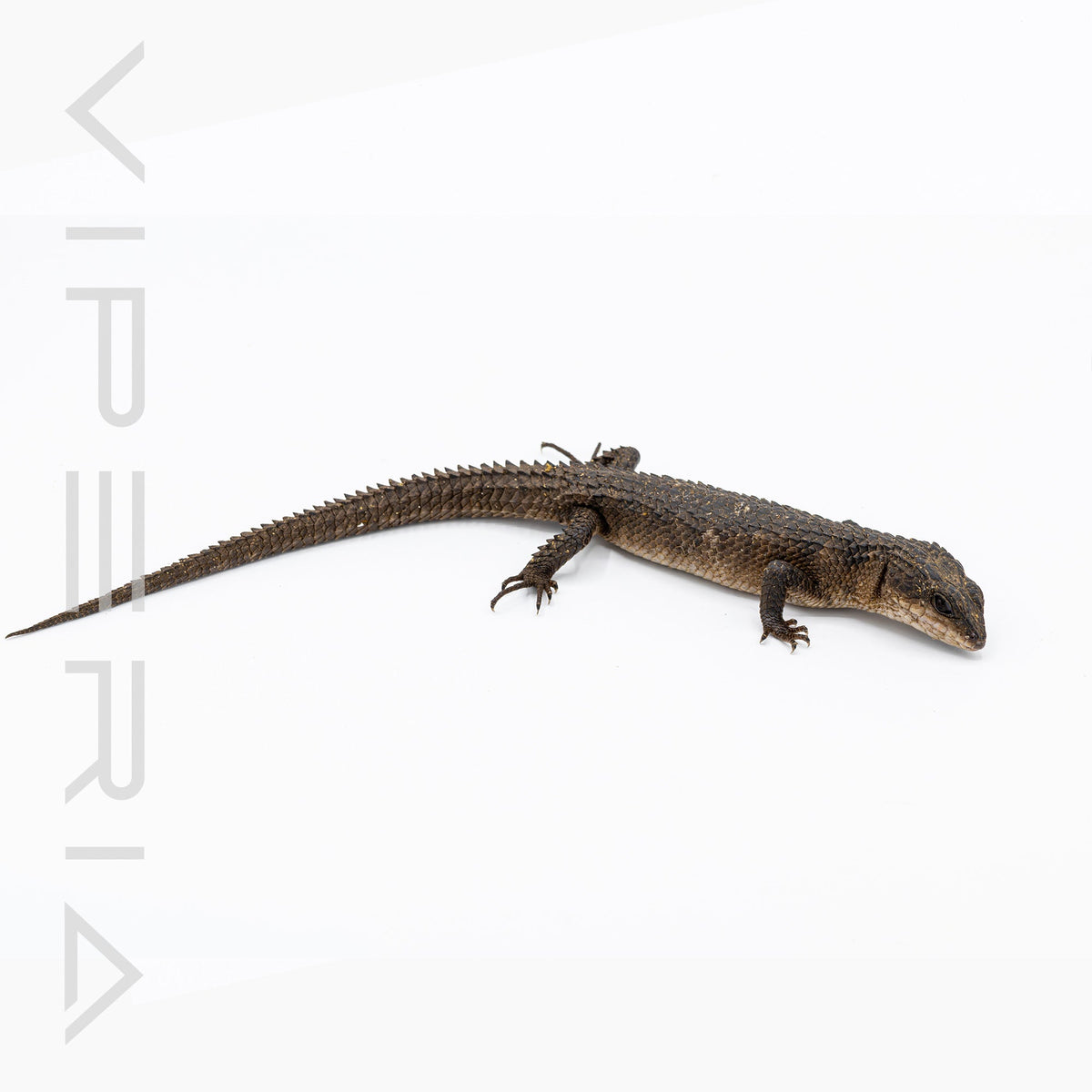
Spiny Tail Water Skink (Tropidophorus baconi)
Spiny Tail Water Skink (Tropidophorus baconi)
Or spread the cost with Klarna at checkout.
Couldn't load pickup availability
- Scientific name
- Tropidophorus baconi
- Source
- WC (Wild caught)
Scientific Name: Tropidophorus baconi
Source: WC
Adult Size: Approximately 15–20cm total length
Native Range: Borneo (Malaysia and Indonesia)
Enclosure: A minimum 60×45×45cm Viperia PVC vivarium for a single adult; pairs or trios benefit from stepping up to a 90×45×45cm Viperia PVC vivarium. Furnish with a deep moisture-retaining substrate such as a coconut fibre and sphagnum moss mix, multiple secure hides at both the warm and cool ends, flat cork bark pieces for basking and shelter, and a shallow water dish large enough for the animal to partially submerge — these skinks are closely associated with water in the wild and appreciate the option.
Heating: Aim for a warm basking spot of around 28–30°C, a cool end ambient of 22–24°C, and allow night-time temperatures to drop naturally to around 20–22°C. A low-wattage basking lamp or ceramic heat emitter on a thermostat is recommended to maintain safe, stable temperatures.
Humidity: Keep ambient humidity high — ideally 75–90% — reflecting the humid tropical forest conditions of their native Borneo. Achieve this by misting the enclosure once or twice daily, using a deep moisture-retaining substrate, and ensuring good (but not excessive) ventilation to prevent stagnant, damp conditions that can encourage bacterial growth.
UVB: A 6% UVB tube run along most of the vivarium's width, positioned so the animal can bask approximately 15–20cm from the lamp. While Tropidophorus skinks are semi-secretive and spend time in shaded, riparian (streamside) microhabitats, access to moderate UVB supports vitamin D₃ synthesis and long-term bone health — it should not be omitted.
Diet: Primarily insectivorous (insect-eating) in the wild. Offer a varied diet of appropriately sized live invertebrates — crickets, dubia roaches, mealworms, and waxworms as an occasional treat — dusted with a quality calcium and multivitamin supplement. Feed juveniles daily and adults every two to three days. Some individuals may also accept small earthworms, which can be a particularly useful food item given this species' affinity for moist, riparian environments.
ABOUT THIS SPECIES
Bacon's Spiny Tail Water Skink is a secretive and fascinating semi-aquatic lizard native to the rainforests of Borneo, where it is typically found close to cool, clear streams and rocky, moss-covered banks. Its most striking feature is the row of keeled, spiny scales running along its tail — a distinctive characteristic shared across the Tropidophorus genus — combined with rich, earthy brown patterning that makes it beautifully cryptic (camouflaged) in its natural habitat. Rarely encountered in the UK hobby, it represents a genuinely unusual and rewarding species for the curious keeper.
These skinks suit an intermediate-level keeper who has experience maintaining high-humidity enclosures and is happy to work with a species that is more of a display and observation animal than a hands-on pet. They can be shy and benefit from a well-planted, heavily furnished vivarium where they feel secure enough to go about their natural behaviours — a well set-up enclosure will reward patience with glimpses of a truly captivating little lizard.
Delivery Information
Delivery Information
Livestock is delivered either on our own van or by a specialist livestock courier. Delivery options and prices for your order are shown at checkout.
Share