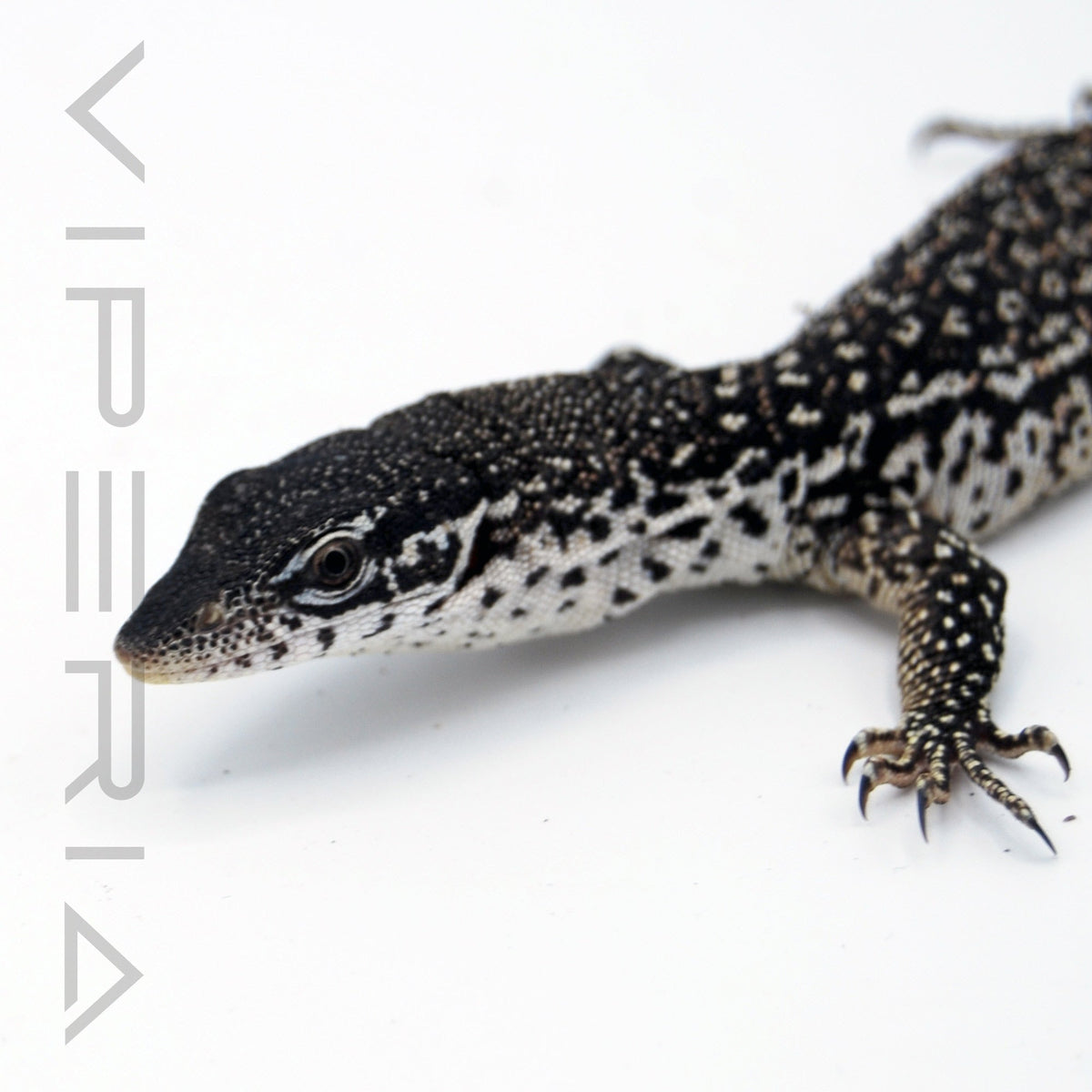
Spotted Tree Monitor (Varanus similis)
Spotted Tree Monitor (Varanus similis)
Or spread the cost with Klarna at checkout.
Couldn't load pickup availability
- Scientific name
- Varanus similis
- Source
- CBID25 (Captive bred in Indonesia 2025)
Scientific Name: Varanus similis
Source: CBID
Adult Size: 60–80cm total length
Native Range: southern New Guinea
Enclosure: A minimum 120×60×120cm Viperia PVC vivarium, set up with sturdy climbing branches, cork bark hides at multiple heights, a deep leaf-litter or coco-fibre substrate, and a raised basking platform positioned close to the heat source
Heating: Basking spot 40-45°C; ambient cool side 26–28°C; night-time drop to 22–24°C is acceptable
Humidity: 60–80%; achieved through light daily misting, a deep moisture-retaining substrate, and good ventilation to prevent stagnant conditions
UVB: A 12% UVB tube run along most of the vivarium's width, positioned so the animal can bask approximately 25–35cm from the lamp; spotted tree monitors are active diurnal baskers (active during daylight hours) and benefit from strong UV exposure
Diet: Primarily insects and invertebrates — offer a varied mix of locusts, dubia roaches, mealworms, and occasional pinky mice for adults; juveniles should be fed daily, adults every 2–3 days, with all prey dusted with a calcium and vitamin supplement
ABOUT THIS SPECIES
The spotted tree monitor is a slender, agile lizard native to the tropical woodlands and forest edges of northern Australia and New Guinea, where it spends much of its time navigating tree trunks, rocky outcrops, and dense undergrowth. It is named for the attractive cream or yellow spotting that contrasts against its dark dorsal colouration, giving it a striking appearance that makes it a popular choice among monitor enthusiasts.
While not a species for complete beginners, spotted tree monitors are considered one of the more manageable mid-sized monitors in captivity — they can become reasonably handleable with consistent, calm interaction from a young age, and their compact size makes them far more practical to house than many of their larger relatives. They suit keepers who have some prior experience with lizards or monitors and are ready to invest in a properly enriched, bioactive-style setup.
Delivery Information
Delivery Information
Livestock is delivered either on our own van or by a specialist livestock courier. Delivery options and prices for your order are shown at checkout.
Share