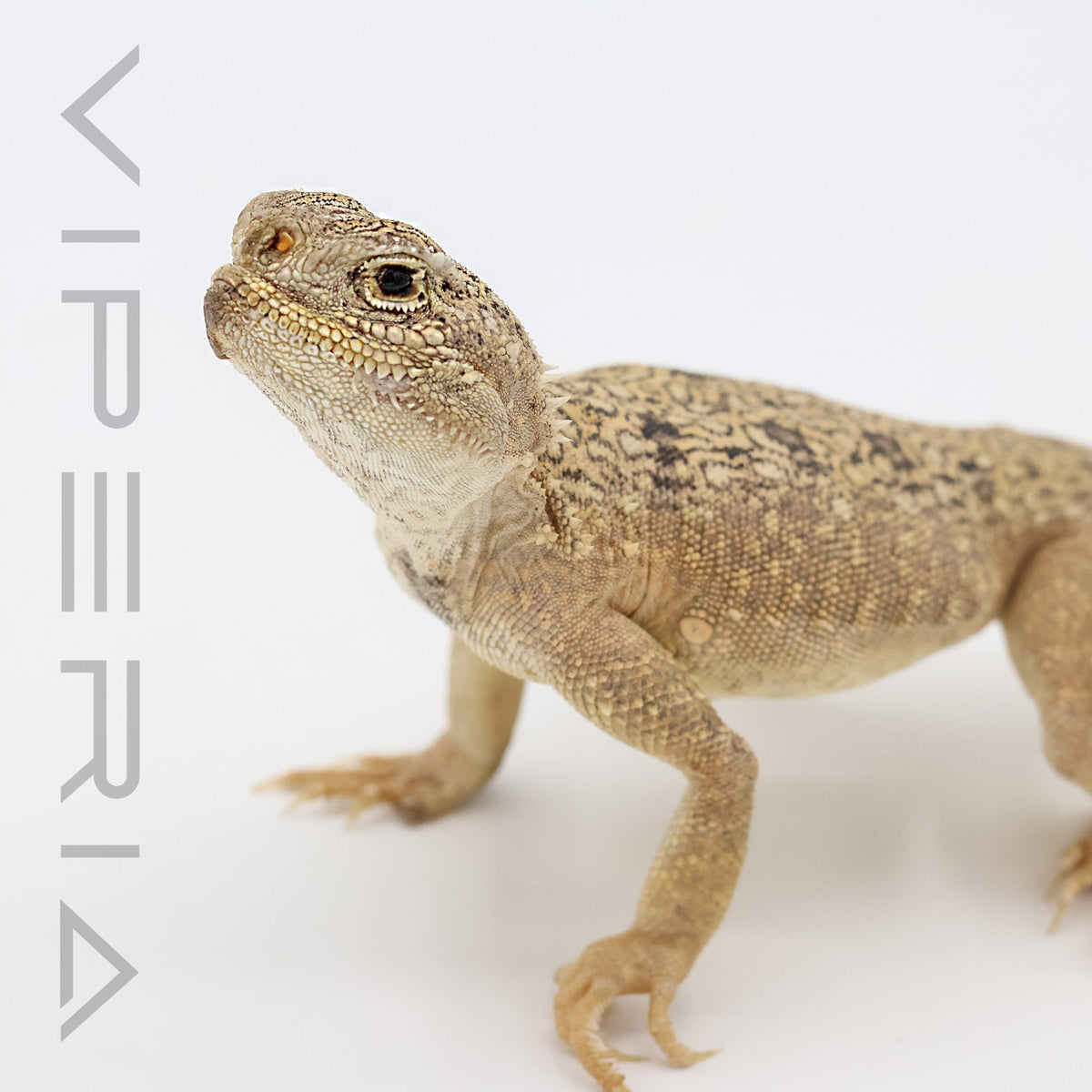
Toad Headed Agama (Phrynocephalus mystaceus)
Toad Headed Agama (Phrynocephalus mystaceus)
Or spread the cost with Klarna at checkout.
Couldn't load pickup availability
- Scientific name
- Phrynocephalus mystaceus
- Source
- WC (Wild caught)
Scientific Name: Phrynocephalus mystaceus
Source: WC
Adult Size: Up to approximately 25–30cm total length (including tail)
Native Range: Arid sandy deserts and semi-deserts from the lower Volga region and Caspian lowlands through Central Asia, including Dagestan and the Astrakhan region of Russia
Enclosure: A minimum 120×60×60cm Viperia PVC vivarium is recommended, set up with a deep layer of fine play sand or a sandy desert substrate mix to allow natural digging behaviour, a thermal gradient from a warm basking zone to a cooler end, and multiple flat rocks or cork pieces to serve as basking platforms and hides
Heating: Basking spot of 45°C, ambient cool end of 28–32°C, with a night-time drop to around 18–22°C
Humidity: Low — 20–35% relative humidity; achieved simply by keeping the enclosure well-ventilated and avoiding regular misting; a PVC vivarium with mesh ventilation panels helps maintain suitably dry conditions
UVB: A 12% UVB tube spanning most of the vivarium's length, positioned so the animal can bask at around 25–35cm from the lamp; this species is an intense, open-desert basker requiring strong UV exposure to thrive in captivity
Diet: Live invertebrates form the staple — offer a varied selection of crickets, locusts, dubia roaches, and mealworms; adults can be fed every 2–3 days, juveniles daily; dust prey with a quality calcium supplement at most feeds and a vitamin/mineral supplement once or twice weekly
ABOUT THIS SPECIES
The Toad-Headed Agama is a captivating and unusual lizard native to the open sandy deserts stretching from southern Russia down through Central Asia — a landscape of scorching dunes and vast, sun-baked flats where very few animals make their home. What sets this species apart immediately is its remarkable defensive display: when threatened, it opens its enormous, frilly mouth wide in a dramatic gape that makes it look far more formidable than its modest size would suggest. It's a genuinely eye-catching animal that draws immediate attention in any collection.
These are active, diurnal (day-active) lizards that spend a good deal of their time out in the open, digging, basking, and patrolling their territory — making them endlessly entertaining to watch through the vivarium glass. They are best suited to a keeper with some prior experience of desert-dwelling agamids, as they have demanding heating and UVB requirements, but for those who can meet those needs they are a highly rewarding and somewhat unusual species to keep.
Delivery Information
Delivery Information
Livestock is delivered either on our own van or by a specialist livestock courier. Delivery options and prices for your order are shown at checkout.
Share